
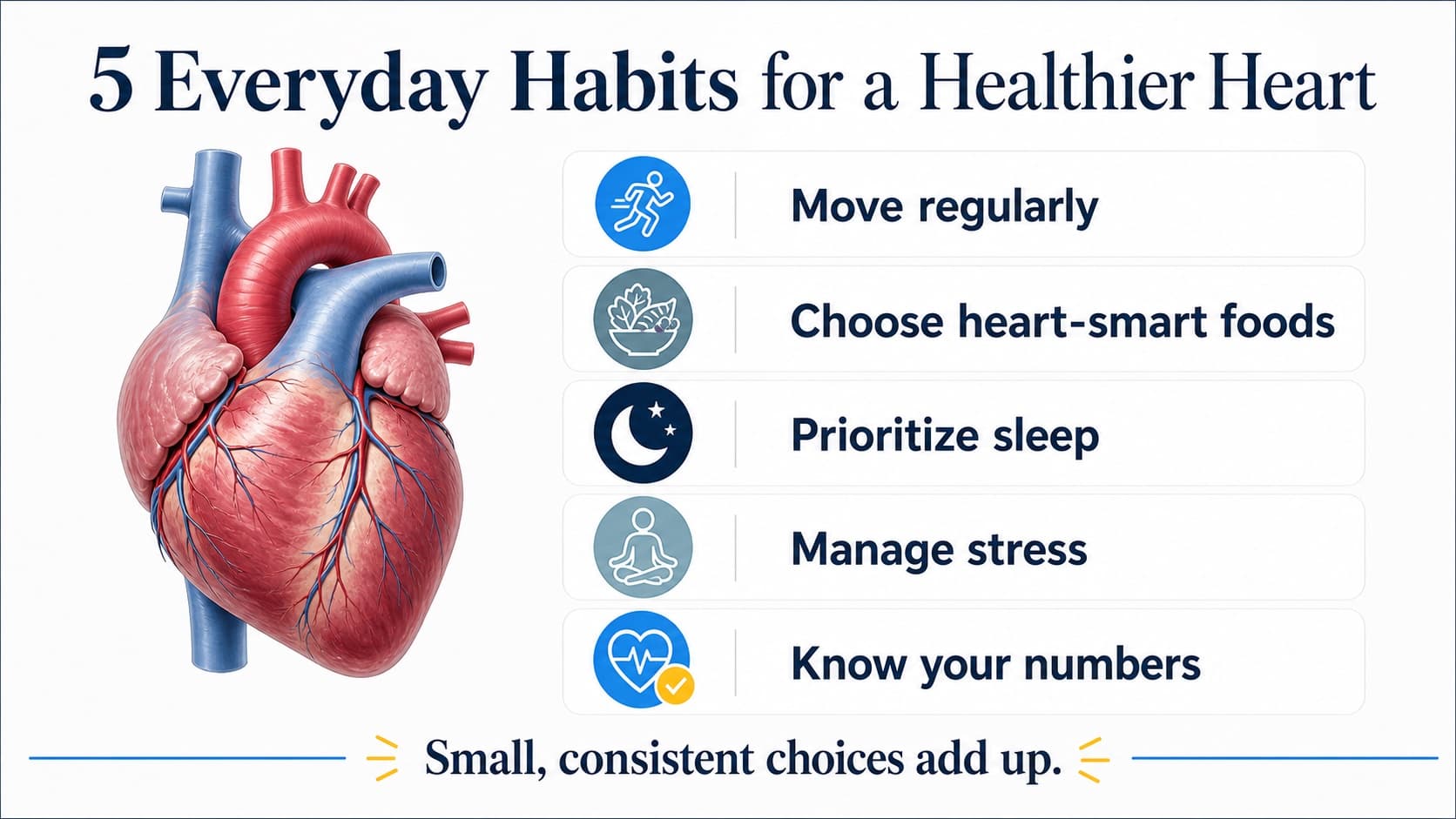
Heart Health · By Total Access Medical ·
5 Everyday Habits for a Healthier Heart
Support long-term heart health with five practical habits for movement, nutrition, sleep, stress management, and preventive care.
Key recommendations that breast cancer survivors can incorporate into their lifestyle so as to reduce the risk of breast cancer recurrence.
Exercise · By Total Access Medical ·
New research highlights key recommendations that breast cancer survivors can incorporate into their lifestyle to reduce the risk of breast cancer recurrence.
The research was published in the Canadian Medical Association Journal (CMAJ).
Exercise & Weight Management Are The Most Important Lifestyle Changes
The authors of the study caution that the findings should not be seen as a panacea for every breast cancer survivor. Some forms of breast cancer are particularly aggressive and may come back despite the most vigorous efforts to make lifestyle changes.
Women who are overweight or obese seem to have the lowest chances of survival. By contrast, women who exercise moderately (30 minutes of physical activity every day, 5 days a week, or 75 weekly minutes of intense exercise) significantly reduce their risk of breast cancer recurrence.
The authors also noted that diet, however, does not seem to have an impact on breast cancer recurrence.
The Effects of Vitamins, Alcohol, and Smoking
As for vitamin supplementation, the review did not find sufficient evidence to show vitamin C is helpful, although a meta-analysis included in the study revealed a 15% reduction in breast cancer mortality for those who took Vitamin C. Further clinical trials are needed to confirm these results.
Supplemental intake of Vitamin D might help maintain bone strength and density especially after chemotherapy and hormonal treatments, which reduce bone density.
The authors strongly advise against smoking. Even though the review could not establish a clear link between quitting smoking and recurrence rates, they note that the risk of death associated with smoking should be reason enough to quit.
Alcohol consumption, when limited to one or fewer alcoholic drinks per day, may reduce the risk of breast cancer recurrence.
Making positive lifestyle changes can be psychologically beneficial to patients by empowering them, since the feeling of loss of control is one of the biggest challenges of a cancer diagnosis.
Because it is common for patients to reduce their level of physical activity after a breast cancer diagnosis, it is important for health care professionals to promote and encourage exercise in this patient population. Simply receiving advice from an oncologist to exercise more has been shown to increase patients' level of activity.
Heart Health · By Total Access Medical ·
Support long-term heart health with five practical habits for movement, nutrition, sleep, stress management, and preventive care.

Exercise · By Total Access Medical ·
Exercise is not just “good for you”—it’s one of the most effective tools women have for reducing the risk of breast cancer coming back.

Aging · By Total Access Medical ·
Getting enough sleep and doing moderate-to-vigorous exercise can help with healthy aging, according to a study published in the journal JAMA Network Open.

Unhurried, deeply personal primary care from a physician who truly knows you.
Questions? Speak directly with our team
610-667-9980