

Heart Health · By Total Access Medical ·
How Does Poor Sleep Affect Heart Health?
Irregular or insufficient sleep increases your risk of cardiovascular disease.
Support long-term heart health with five practical habits for movement, nutrition, sleep, stress management, and preventive care.
Heart Health · By Total Access Medical ·
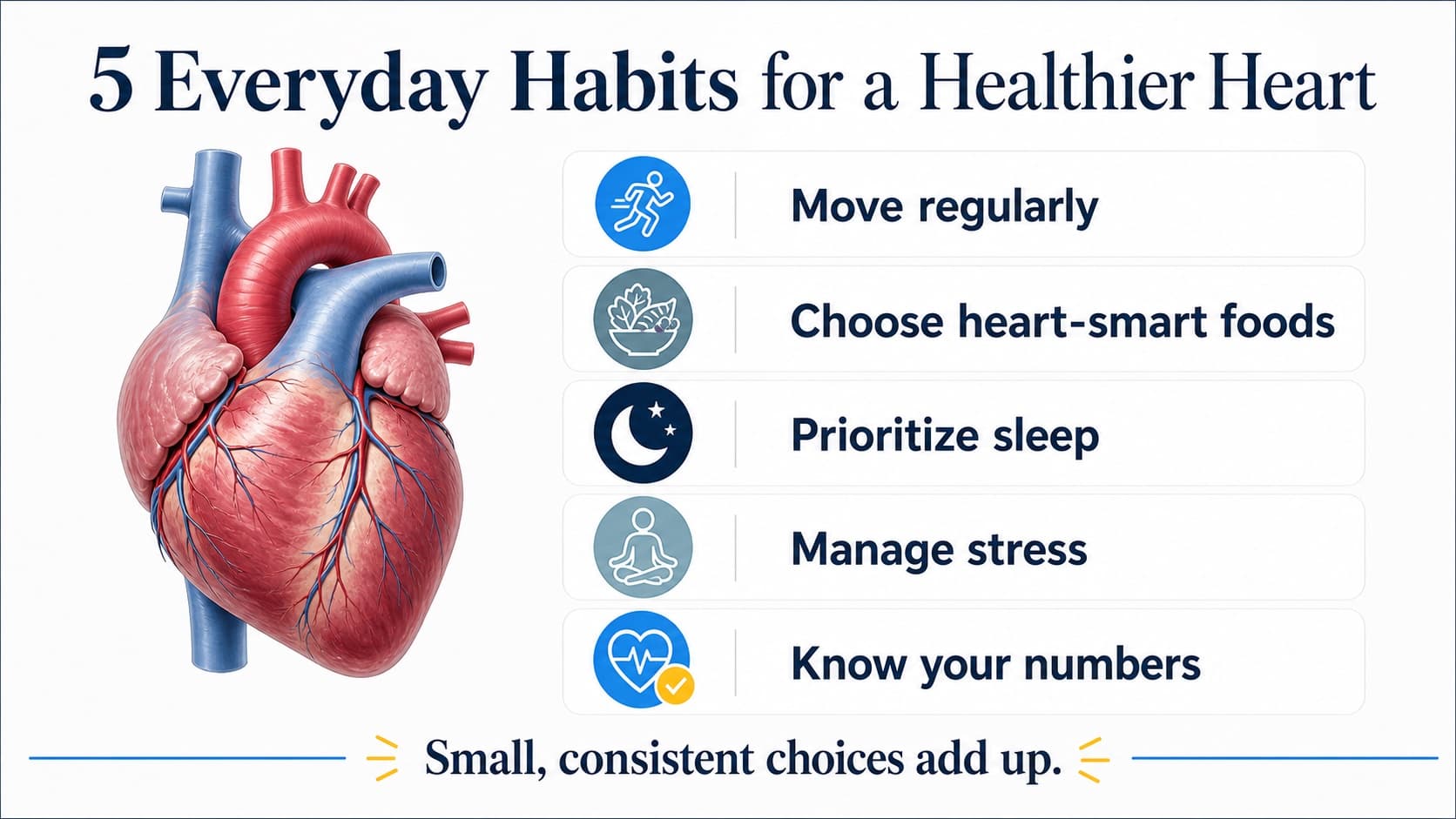
Heart health is shaped by what you do most days—not by a single perfect meal or workout. Small, repeatable choices can support healthier blood pressure, cholesterol, blood sugar, sleep, and overall cardiovascular fitness. The five habits below are a practical place to start. They complement other important steps, including avoiding tobacco and nicotine and following your clinician’s recommendations.
Aim to build movement into your week in ways you can sustain. For most adults, a useful goal is at least 150 minutes of moderate-intensity activity or 75 minutes of vigorous activity per week, ideally spread across several days. Brisk walking, cycling, swimming, dancing, and active household tasks can all count.
If that feels like a big jump, begin with ten-minute walks, take movement breaks during long periods of sitting, or add one active appointment to your calendar at a time. If you have symptoms, a chronic condition, or have been inactive for a long time, ask your clinician how to increase activity safely.
Focus on the overall pattern of your meals. Build more of them around vegetables, fruit, whole grains, beans, lentils, nuts, seeds, fish, and lean proteins. Use unsaturated fats, such as olive or canola oil, more often than fats high in saturated fat.
At the same time, limit highly processed foods, excess sodium, added sugars, and trans fats. You do not have to overhaul your kitchen overnight. Try one practical swap: add vegetables to lunch, choose water instead of a sugary drink, or prepare one more meal at home each week.
Most adults should aim for seven to nine hours of sleep each night. A consistent sleep and wake schedule, a dark and quiet bedroom, and less late-night screen time can help. Regular daytime activity can also support better sleep.
Tell your clinician about persistent insomnia, loud snoring, gasping during sleep, morning headaches, or excessive daytime sleepiness. These symptoms may point to a sleep problem that deserves evaluation.
Stress is part of life, but your response to it matters. Simple practices—slow breathing, a walk outdoors, time with supportive people, meditation, journaling, or a favorite hobby—can make stress easier to manage. Choose one method you can use consistently, especially during busy periods.
Stress-management practices support heart-healthy routines, but they are not a substitute for medical care. If anxiety, low mood, or ongoing stress is affecting daily life, talk with a healthcare professional.
Blood pressure, cholesterol, and blood sugar can change without obvious symptoms. Routine primary care makes it easier to track these measures, understand your personal risk, and act early. Ask how often you should be screened and what targets are appropriate for you based on your age, history, medications, and other health factors.
If you monitor blood pressure at home, use a validated upper-arm cuff and bring your readings to appointments. Never stop or change a prescribed medicine without speaking with your clinician.
Choose one action that is realistic this week: schedule a walk, add a vegetable to dinner, set a regular bedtime, practice two minutes of slow breathing, or book a preventive visit. Once that action feels routine, build on it. Small, consistent choices add up.
This article is for general education and is not a substitute for personalized medical advice. If you think you may be having a heart attack or stroke, call 911 immediately.
Heart Health · By Total Access Medical ·
Irregular or insufficient sleep increases your risk of cardiovascular disease.

Heart Health · By Total Access Medical ·
If you have high blood pressure, the force of the blood pushing against the artery walls is consistently too high. The heart has to work harder to pump blood.

Heart Health · By Total Access Medical ·
Researchers have found that women who report binge drinking may have a greater risk of heart disease compared to men.

Unhurried, deeply personal primary care from a physician who truly knows you.
Questions? Speak directly with our team
610-667-9980