
Heart Health · By Total Access Medical ·
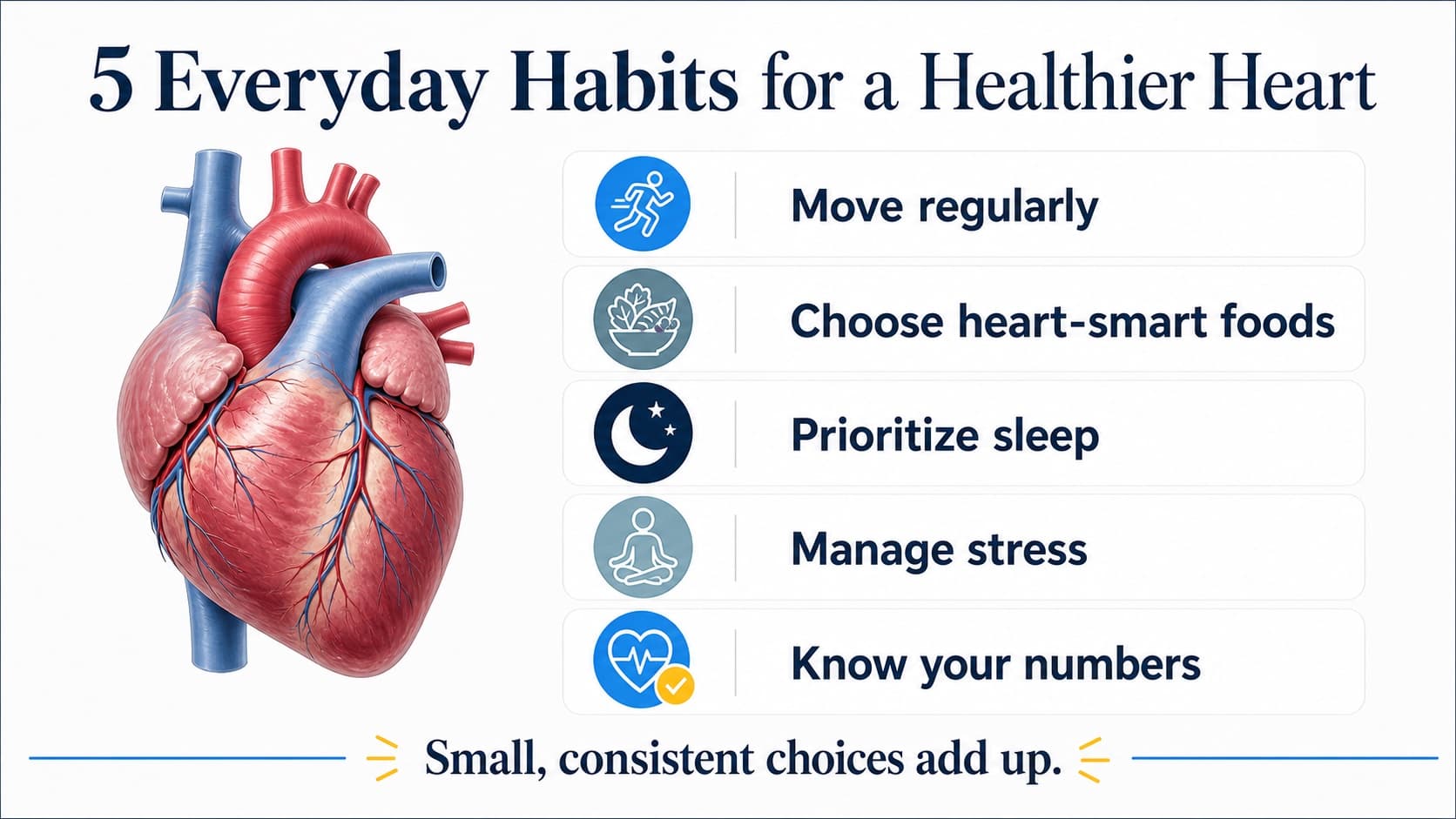
5 Everyday Habits for a Healthier Heart
Support long-term heart health with five practical habits for movement, nutrition, sleep, stress management, and preventive care.
Physical activity or exercise is known to improve sleep quality, reduce symptoms of insomnia, and benefit overall health.
Exercise · By Total Access Medical ·

In a recent study published in the journal BMJ Open, a team of researchers conducted a longitudinal study over 10 years to understand the association between physical activity and sleep duration, daytime sleepiness, and current insomnia symptoms in adults.
Adequate sleep is one of the major aspects of life and health that has suffered due to the fast-paced nature of modern lives and an increase in the use of electronic devices such as mobile phones.
Sleep disturbance and insomnia have a direct impact on overall health, can increase the risk of metabolic dysfunction, cardiovascular disease, and psychiatric disorders, and impact the quality of life.
Physical activity or exercise is known to improve sleep quality, reduce symptoms of insomnia, and benefit overall health. Exercise has been associated with reduced daytime sleepiness, and low levels of physical activity are believed to increase daytime sleepiness.
However, factors such as age, gender, body mass index (BMI), general state of health, fitness levels, and type of physical activity can moderate the association between exercise and sleep quality through numerous psychological and physiological pathways.
Furthermore, there is a dearth of long-term data from studies involving large cohorts, making it difficult to decipher whether the positive impact on sleep outcomes is due to higher physical activity levels, or inadequate physical activity is due to disturbed sleep.
About the study
In the present study, the researchers aimed to assess whether the frequency, intensity, and duration of physical activity were interrelated with daytime sleepiness, disturbed sleep, and symptoms of insomnia.
The study was conducted across nine countries, twice over a span of 10 years, among adults between the ages of 39 and 67 years.
Results
The results showed that adequate physical activity was associated with a lower incidence of either short or long sleep durations and decreased risk of some symptoms of insomnia.
Individuals who maintained adequate physical activity levels through the 10 years of follow-up were found to be less likely to report symptoms of insomnia during the follow-up.
Furthermore, persistently active individuals also reported achieving the recommended six to nine hours of sleep, and these associations were found to be significant even after adjusting for confounders such as age, sex, BMI, and smoking behavior.
On average, individuals who were persistently active over the 10 years of follow-up had lower BMI, were younger, and were male. They were also less likely to be smokers and more likely to be currently employed.
Although daytime sleepiness or symptoms such as difficulty maintaining sleep were not found to be linked to physical activity levels, smoking behavior was found to have independent associations with daytime sleepiness.
Conclusions
Overall, the findings suggested that consistent, long-term physical activity can decrease the risk of various insomnia symptoms and help achieve adequate sleep.
Furthermore, although physical activity levels did not seem to impact the occurrence of daytime sleepiness, lifestyle factors such as smoking behavior were associated with daytime sleepiness.
Heart Health · By Total Access Medical ·
Support long-term heart health with five practical habits for movement, nutrition, sleep, stress management, and preventive care.

Exercise · By Total Access Medical ·
Exercise is not just “good for you”—it’s one of the most effective tools women have for reducing the risk of breast cancer coming back.

Aging · By Total Access Medical ·
Getting enough sleep and doing moderate-to-vigorous exercise can help with healthy aging, according to a study published in the journal JAMA Network Open.

Unhurried, deeply personal primary care from a physician who truly knows you.
Questions? Speak directly with our team
610-667-9980